Home › Gravel-to-Asphalt Conversions
Our gravel to asphalt driveway service in Henderson, NV transforms dusty, rutted drives into clean, solid blacktop. We shape and compact the existing gravel, add base where needed, and pave a new asphalt surface that is easier to drive and maintain. This upgrade greatly reduces dust, mud, and ongoing gravel replacement.
Precision Asphalt Henderson provides professional gravel to asphalt driveway throughout Henderson, NV, Nevada and the surrounding area. Our licensed, insured crew delivers safe, clean, on-time work with a free estimate before anything begins. Call (702) 707-5043 or request your free quote.
Turn Your Gravel Driveway Into a Clean, Solid Asphalt Surface
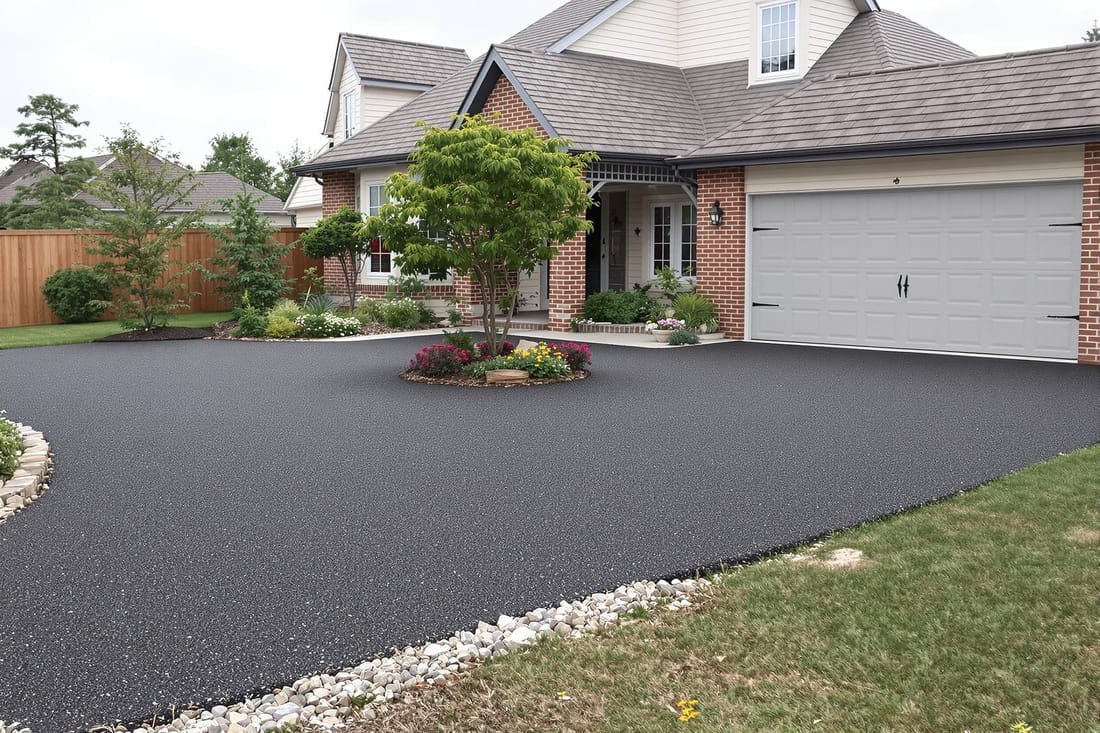
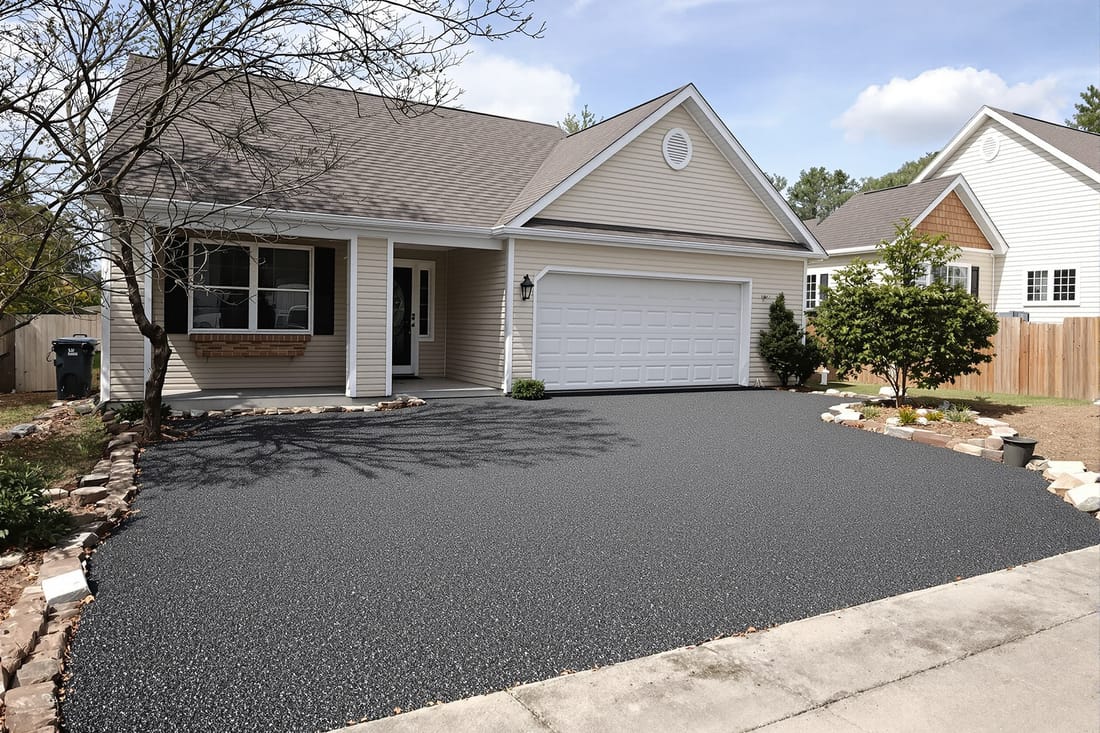
If you are tired of ruts, dust, and loose rock every time you pull into your driveway, a gravel to asphalt driveway conversion can be a big quality of life upgrade. Precision Asphalt Henderson specializes in taking existing gravel driveways in Henderson, Green Valley, Seven Hills, and the surrounding desert communities and turning them into smooth, durable asphalt that handles daily use and intense summer heat.
Unlike building a driveway from scratch, a gravel to asphalt conversion starts with what you already have. Your existing gravel base can be an asset, but only if it is properly compacted, leveled, and corrected where it has shifted over the years. Our crew checks how thick the gravel layer is, where water naturally flows during a rare Henderson downpour, and where vehicles typically drive and park. This allows us to design the asphalt structure to match how your driveway is actually used instead of guessing from a distance.
In the Henderson area, the combination of caliche soil, desert dust, and big temperature swings can cause poorly prepared driveways to crack or rut within a couple of years. Precision Asphalt Henderson tailors each conversion to those local conditions. We select asphalt mixes that hold up to UV exposure and light commercial traffic where needed, and we pay close attention to drainage so water does not sit under the new pavement and weaken it over time.
How Our Gravel-to-Asphalt Conversion Process Works
Our goal is to explain every step before we start, so you know what to expect from the first visit to the last roller pass.
1. Site visit and evaluation
We begin with a walk of your gravel driveway. We look at base thickness, soft spots, existing ruts, and how close the driveway sits to garages, gates, and sidewalks. We also look at how you use the space: single lane or double wide, parking for trailers or RVs, frequent turning or backing. In Henderson, many driveways are on slight slopes, so we note where stormwater currently goes and where it should go.
2. Grading and base corrections
A gravel to asphalt driveway is only as good as its base. We bring in grading equipment to reshape the existing gravel, cut out low spots, and remove loose, dusty material that will not compact. If needed, we add new aggregate base material to build up weak areas or adjust the slope. Soft or pumping spots are excavated and rebuilt so they do not turn into depressions after paving.
3. Compaction and proof rolling
Once the base is shaped, we compact it with rollers and compactors. For conversions, this step is critical. We perform a proof roll, which means we slowly drive a loaded vehicle or roller over the entire area and watch for movement or flexing. Any area that deflects gets reworked before we put asphalt on top.
4. Tack coat and asphalt placement
We apply a tack coat, which is a light asphalt emulsion, to help bond the new asphalt to the prepared base. Then we place hot mix asphalt at the design thickness, usually between 2 and 3 inches for residential driveways, thicker for heavy use. We use pavers where access allows for the smoothest finish, then compact the asphalt with steel drum and pneumatic rollers to lock the surface together.
5. Final rolling, clean up, and curing
After compaction, we hand finish edges, transition areas, and tight spots around gates, aprons, or walkways. We sweep, remove debris, and leave you with clear instructions on when you can walk and drive on the new surface. Most Henderson homeowners can drive on their new asphalt within 24 to 48 hours, depending on temperature and thickness.
Local Design Choices That Work in Henderson’s Climate
Not every gravel to asphalt driveway should be built the same way. Precision Asphalt Henderson walks you through choices that actually matter for performance and appearance in our desert environment.
Asphalt thickness and mix: For a typical residential driveway that used to be gravel, we often recommend a 2.5 to 3 inch compacted asphalt layer. If you park work trucks, trailers, or RVs, we may increase thickness or adjust the mix to handle higher loads. In Henderson, the summer heat can soften thin or low quality asphalt, so we avoid mixes that are too light for the local conditions.
Base reinforcement: Some older gravel driveways have thin, patchy bases, especially on properties that were graded years ago and then slowly built up with gravel deliveries. In those cases, we may propose additional base rock or, for trouble spots, geotextile fabric beneath the base to keep soft subgrade from pushing through.
Drainage and runoff: Even though Henderson is dry most of the year, we design gravel to asphalt conversions with the rare heavy rain in mind. We establish a consistent crown or cross slope so water sheds to the sides and does not sit in the wheel paths. Where driveways meet the street, we take care not to block existing gutters or create ponding at the apron.
Edges and transitions: For rural or larger properties where the driveway edges meet native soil, we can taper the asphalt edge or add shoulder gravel so you are not dealing with a sharp drop from pavement to dirt. At garages and walkways, we adjust the elevation so doors clear easily, trip hazards are eliminated, and you do not get standing water at thresholds.
Appearance options: While driveways are mostly about function, we know curb appeal matters in neighborhoods across Henderson and the greater Las Vegas Valley. We can adjust the driveway width, create a defined parking pad, or add a small flare near the street to make backing out easier. Once the asphalt has cured, many homeowners choose to sealcoat for a darker, more uniform look and added UV protection.
What Affects the Cost of Converting Gravel to Asphalt in Henderson
Every project is different, but there are consistent factors that drive the price of a gravel to asphalt driveway conversion. Precision Asphalt Henderson is upfront about these items so you can budget realistically.
Driveway size and shape: A straight, 60 foot by 12 foot residential driveway will cost less per square foot than a long, winding drive with tight curves and multiple parking areas. Irregular shapes and numerous transitions require more handwork and edging.
Existing base condition: If your gravel has been in place for years and was originally installed with a good base, we may be able to reuse most of it with only minor corrections. That keeps costs down. If we find deep ruts, thin spots over caliche, or evidence of poor drainage, we will recommend additional base work. Although it adds some cost up front, it prevents expensive failures later.
Access and staging: In some Henderson neighborhoods, getting paving equipment and trucks close to the work area is simple. On flag lots, backyards accessed through narrow side yards, or properties behind gates with tight clearances, it may take smaller equipment and more time. We factor this into the estimate, and we will explain any access related costs.
Thickness and use: A driveway designed for light car traffic can use less asphalt than one that regularly sees heavy work trucks, trailers, or motorhomes. Thicker asphalt and beefed up base cost more initially, but they avoid rutting and early replacement.
Optional items: Line striping for shared drives, added parking pads, small retaining edges, or early sealcoating (after proper cure) will change the final price. During the estimate, we separate these items so you can decide what is a must have and what is a nice upgrade.
Common Issues We Prevent (and How We Stand Behind Our Work)
When a gravel to asphalt driveway is done too quickly or without a good look at the base and drainage, several predictable problems show up. Precision Asphalt Henderson focuses our conversions on preventing those issues so you get a driveway that performs well for years.
Ruts and depressions: These usually appear where vehicle tires always track or where old soft spots in the gravel base were left uncorrected. We address this by proof rolling, overbuilding weak sections with new base rock, and compacting in multiple passes before we ever place asphalt.
Cracking from movement or subgrade issues: In Henderson, pockets of expansive or poorly compacted soil can move with moisture changes. By identifying and correcting those areas, and by using the right asphalt thickness, we reduce the risk of reflective cracking. For troublesome areas, we may recommend localized undercutting and rebuilding of the base.
Water pooling against structures: A new asphalt surface that was not graded correctly can send water toward garage doors or home foundations. During layout and grading, we set consistent slopes away from structures and verify flow after compaction. If needed, we integrate small swales or transitions to tie your driveway into existing drainage patterns.
Communication and warranty: Throughout the project, we keep you informed about what we are finding in the existing gravel and why we recommend certain fixes. At completion, you receive basic care guidelines, including when to park heavy vehicles and when it is appropriate to consider sealcoating. We stand behind our workmanship and are local to Henderson, so if you have questions or concerns after the job, you are not chasing a contractor from out of town.